Our recent interview with BX1 on urban wind energy is available online!
About
UrbanWind.energy is an online data platform that provides accurate and reliable data for wind energy potential in cities.
When suitable wind conditions exist, wind turbines can provide reliable and cost-effective clean energy for buildings in cities. They can be an ideal complement to solar panels, as they perform better when solar panels don’t: in the evening and in winter, when solar radiation is lower and wind is stronger. Therefore, a combination of solar and wind can also reduce the need for energy storage and use of the grid.
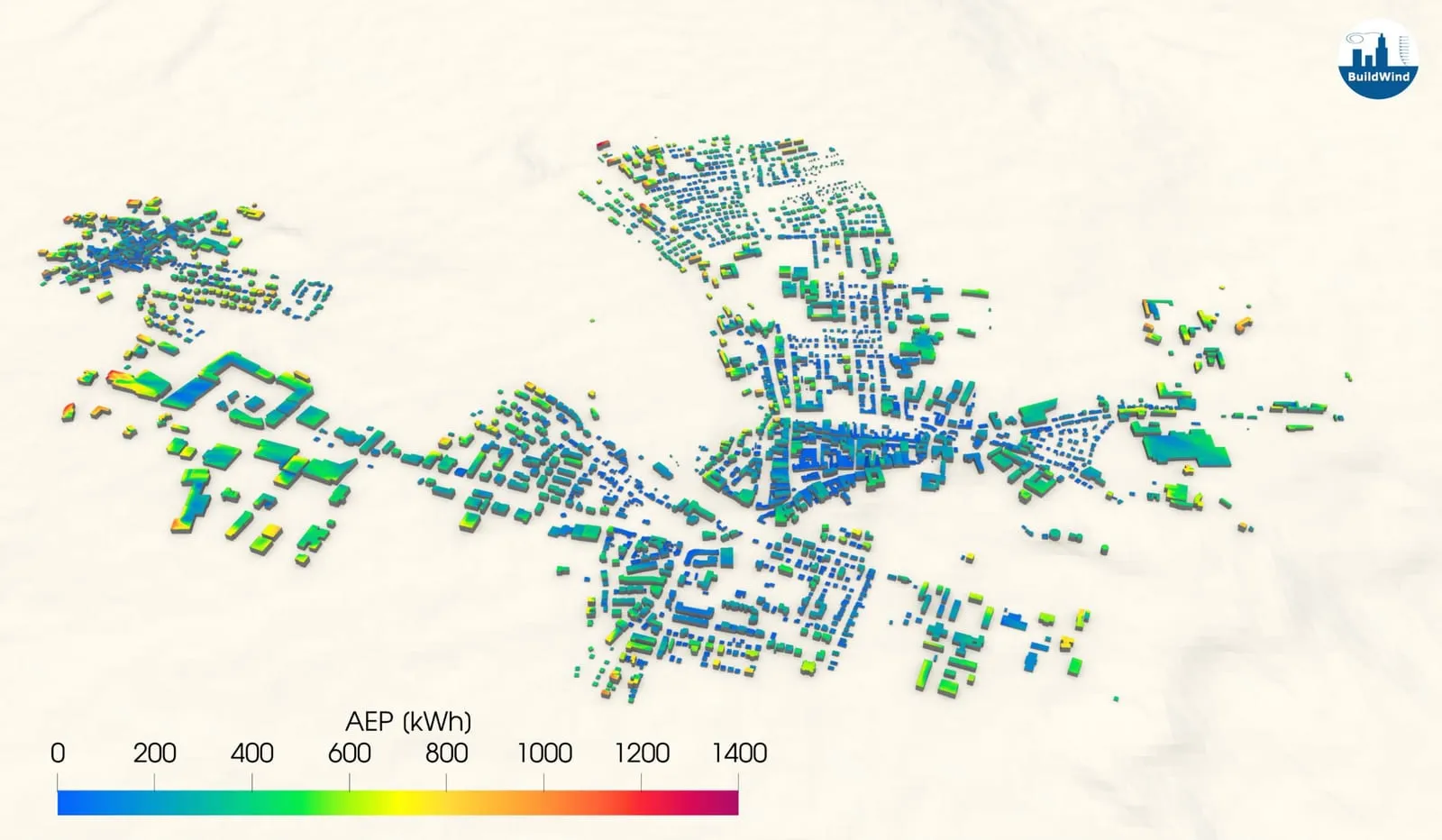
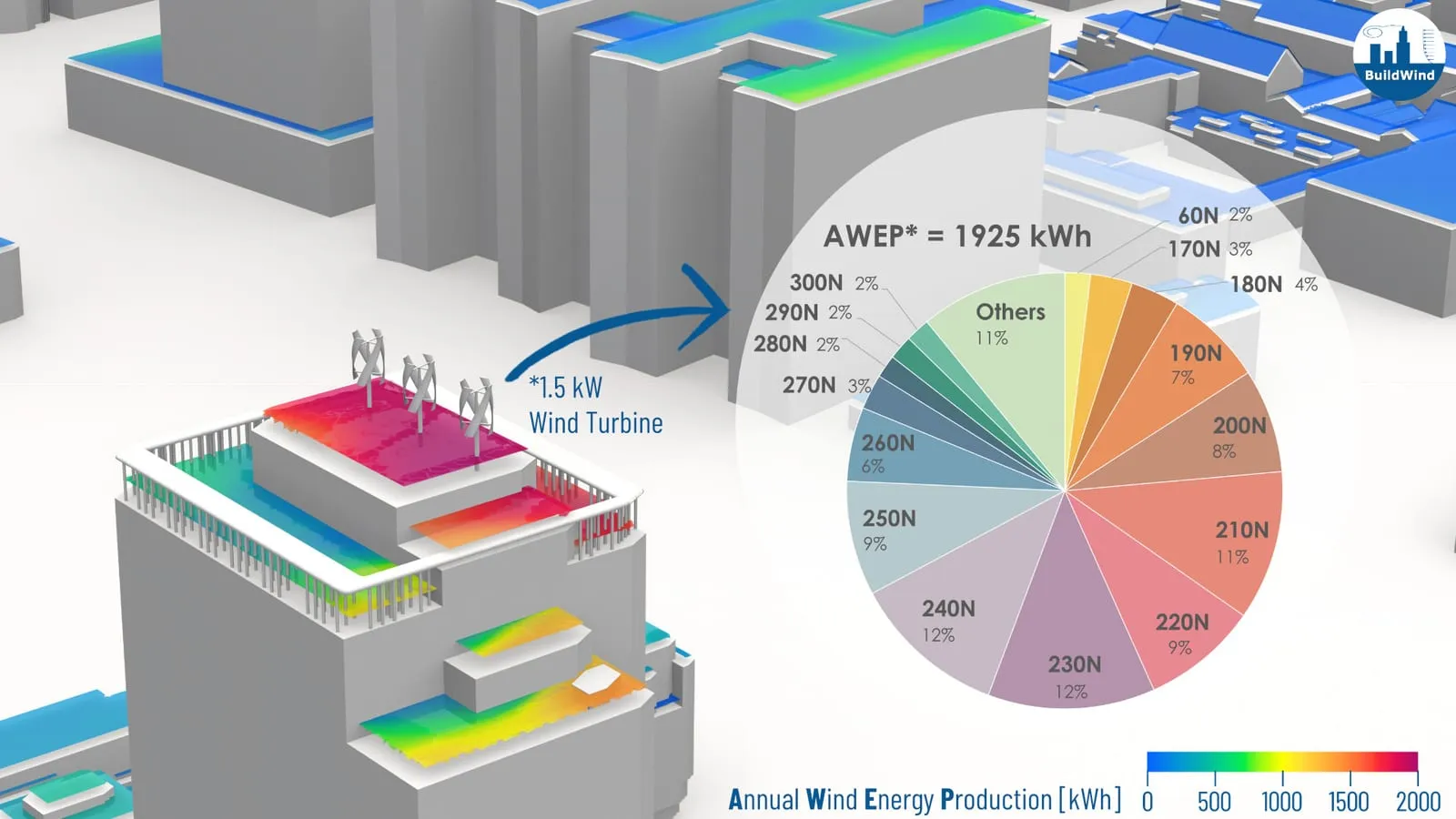
UrbanWind.energy users can quickly and easily access information about ideal locations for turbine installation, recommended turbine type and size, annual energy output, visual, noise and environmental impact to support their decision-making and design process.
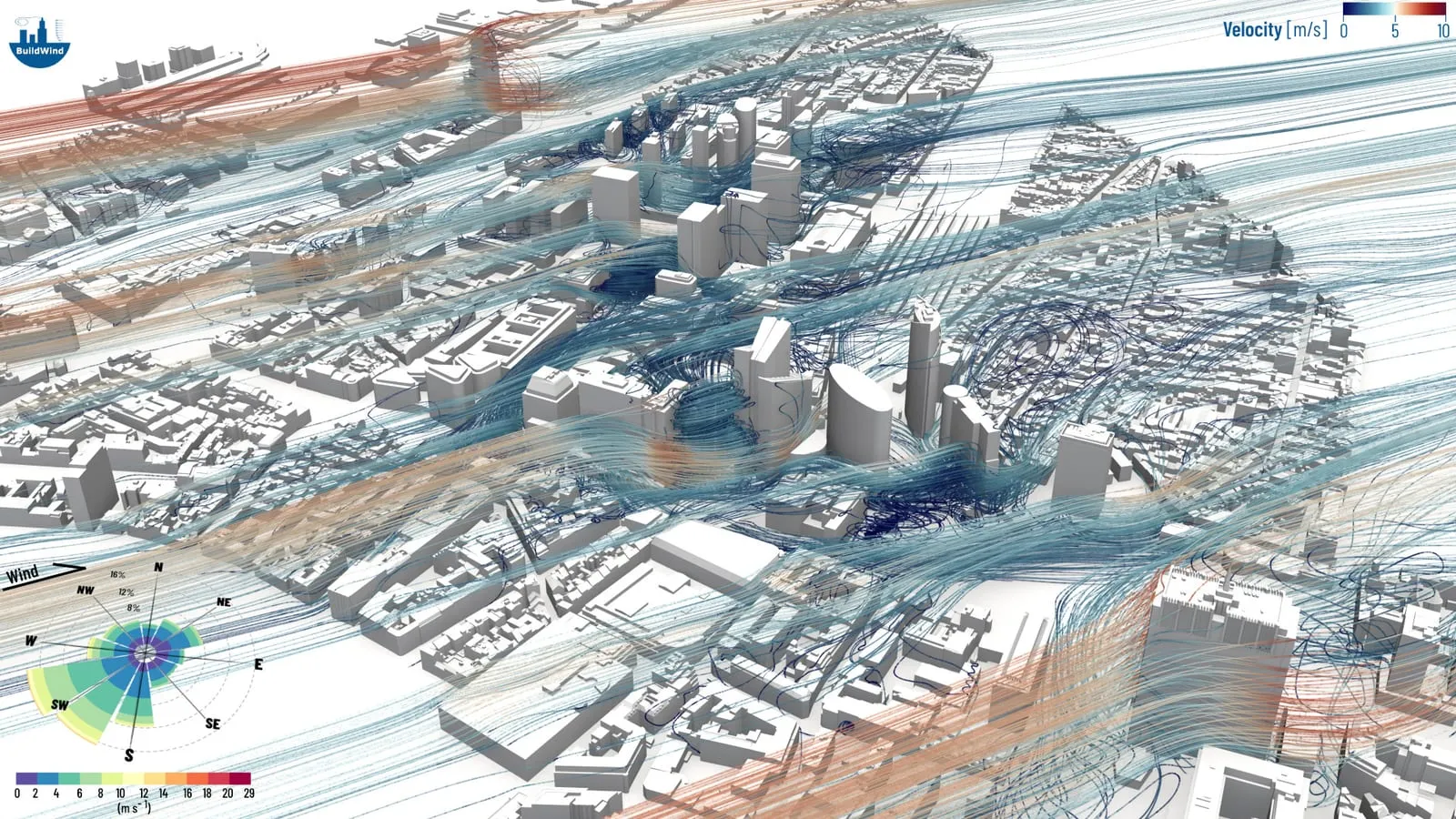
UrbanWind.energy data are generated using detailed and accurate Computational Fluid Dynamics simulations of wind flow in cities, based on meteorological data from the last 30 years, enhanced using machine learning techniques and analysed using automatic optimization algorithms.
UrbanWind.energy is developed by BuildWind, a Belgian SME specialised in the numerical simulation of the built environment. The software that BuildWind developed to perform urban wind energy analyses is based on a combination of Computational Fluid Dynamics simulation, machine learning and data processing algorithms. Two case studies are currently in progress in the Brussels Capital Region in the frame of the Wind Energy Brussels project funded by Innoviris under grant 2022-JRDIC-7a.
We are constantly looking for new partners among municipalities, research entities and the industry to apply our wind simulation and analysis tools. Contact us if you wish to know more.
Our recent interview with BX1 on urban wind energy is available online!
Our recent interview with BBC News Arabic on urban wind energy is available online!
The ambition of the Wind Energy Brussels project is the development of a holistic wind energy harvesting strategy for cities.
2 case studies are in progress in the Brussels Capital Region in order to identify the most suited areas to
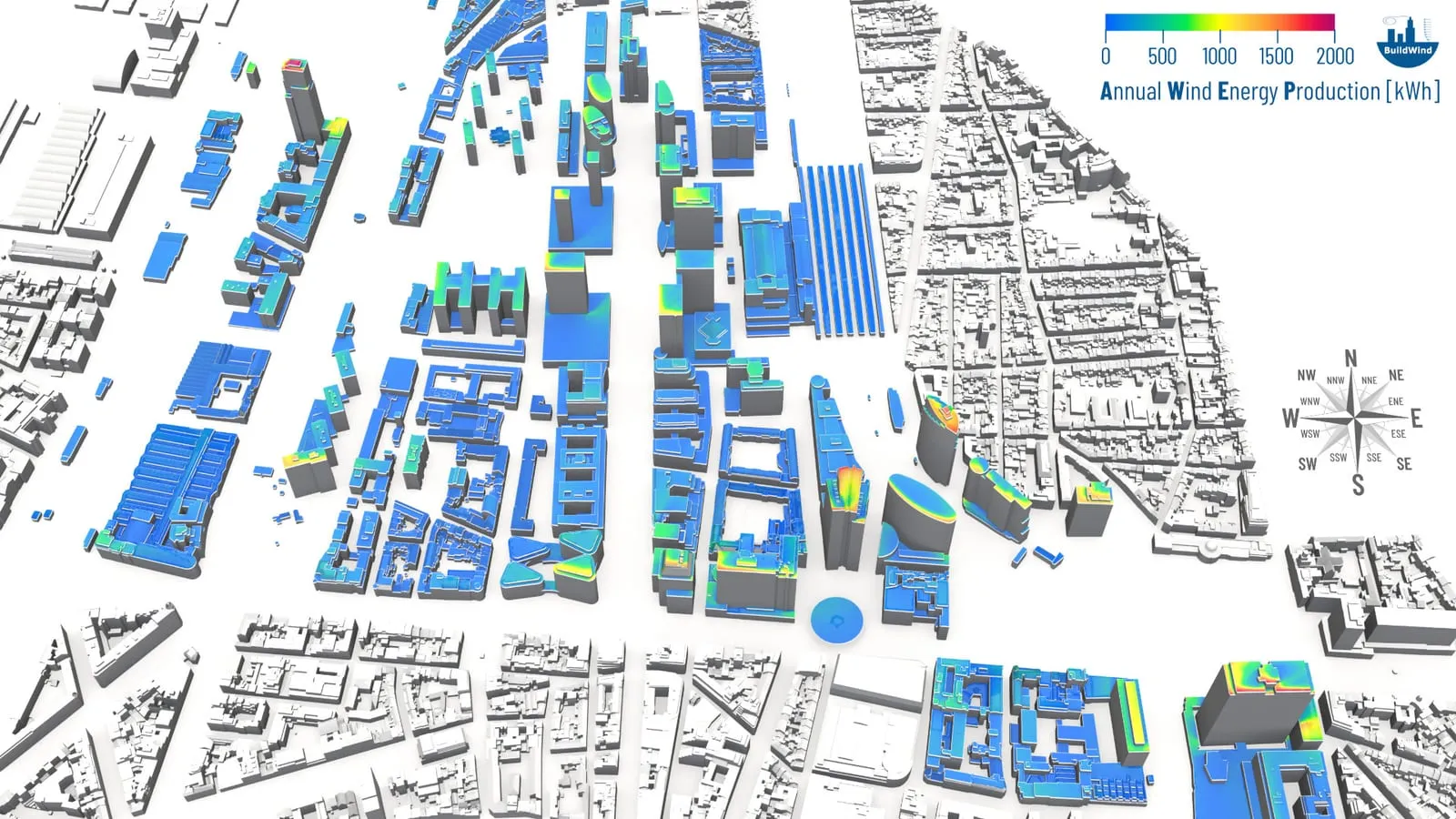
UrbanWind.energy data for the Northern Quarter (Brussels) are part of WEB project.
The need to tackle climate change and achieve the desired carbon neutrality to keep pace with the 1.5 degrees is more urgent than ever. The climate deal at COP26 calls on all nations to set new ambitious climate targets in preparing their NDCs and further urges them to integrate mitigation and adaptation measures into national, regional and local planning.
Cities and urban areas are vital for achieving climate protection and energy transition targets, being currently responsible for around 70% of energy-related CO2 emissions. Particularly in Europe, with increased global urbanisation around 85% of the population is projected to be living in cities by 2050. Cities of different sizes are decisive to reach the COP26 goals. Given the long-term persistence of urban structures, we have to act now.
The PLENTY-LIFE project is focused on establishing an innovative methodology of stakeholder-based holistic integrated spatial and energy planning (HISEP) methodology. HISEP comprises building capacity of SMCTs in the field of integrated urban energy planning to enable them preparing and monitoring long-term sustainable energy strategies and plans tailored for their specific conditions to manage the clean energy transition and achieve carbon neutrality by 2030/2050. Besides, it aims at Institutionalising the HISEP methodology that implies a cross-sectoral planning process, integrating the energy system with other development sectors to plan the energy transition towards and to achieve sustainable and efficient carbon neutral SMCTs.
BuildWind is contributing to the project with their simulation technology and expertise in urban wind energy and urban heat island effect.
UrbanWind.energy data in Horn, Eggenburg, Fundão are part of PLENTY-LIFE project.